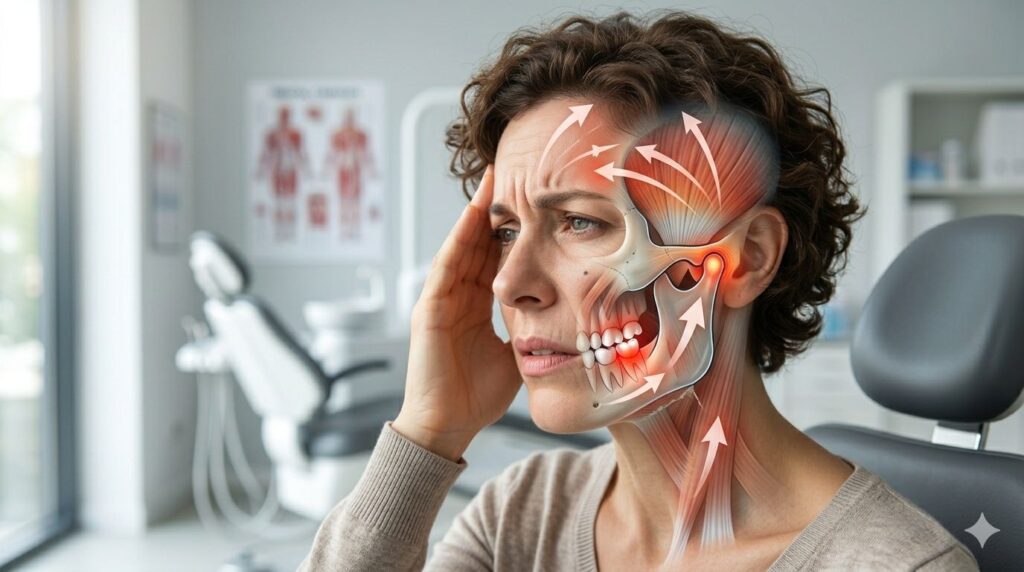
If you’re someone who frequently deals with headaches, you’ve probably blamed stress, screen time, lack of sleep, or even dehydration. And while those are definitely common triggers, there’s one surprising cause many people overlook: your bite.
Yes—your teeth alignment and jaw position may be contributing to recurring headaches more than you realize.
In fact, dentists often see patients who have been struggling with headaches for months (sometimes years), only to discover the real issue was related to jaw tension, bite imbalance, or teeth grinding.
Let’s explore the connection between your bite and headaches, the symptoms to watch for, and what treatment options can actually bring relief.
Understanding the Link Between Your Bite and Headaches
Your “bite” refers to how your upper and lower teeth fit together when your mouth closes. Ideally, your bite should be balanced, meaning your jaw closes evenly without putting pressure on certain teeth or muscles.
But when the bite is misaligned—even slightly—it can cause your jaw muscles to overwork. This leads to strain in the jaw joint and facial muscles, which can eventually trigger headaches.
The muscles around your jaw are connected to your neck, head, and temples. So when your jaw is under constant tension, your head often pays the price.
TMJ Disorders: A Common Hidden Cause
One of the biggest bite-related headache triggers is TMJ disorder, also known as temporomandibular joint dysfunction.
The TMJ is the joint that connects your jaw to your skull. It allows you to chew, speak, yawn, and move your jaw comfortably.
When this joint becomes inflamed or strained, it can cause symptoms like:
- frequent headaches
- jaw pain or soreness
- clicking or popping sounds in the jaw
- facial pain
- stiffness while opening the mouth
- ear pain or pressure (without infection)
TMJ issues are extremely common—and many people don’t realize their headaches may be dental-related.
Teeth Grinding (Bruxism) and Headaches
Another major cause is bruxism, which is the habit of grinding or clenching your teeth, often during sleep.
Many people grind their teeth without even knowing it. But your body feels the impact.
Grinding puts intense pressure on the jaw muscles and teeth, leading to:
- tension headaches (especially in the morning)
- sore jaw when you wake up
- worn-down teeth
- tooth sensitivity
- tightness in the face or temples
If you often wake up with a dull headache or jaw tightness, bruxism could be a major clue.
How Bite Problems Trigger Headaches
When your bite is uneven, your jaw may shift slightly to find a “comfortable” position. Over time, this constant compensation creates muscle fatigue and tension.
This tension can travel to areas such as:
- temples
- forehead
- behind the eyes
- neck and shoulders
That’s why bite-related headaches are often mistaken for migraines or stress headaches.
The body is essentially reacting to an imbalance that’s happening inside the mouth.
Common Signs Your Headaches May Be Bite-Related
Not all headaches are caused by dental issues—but here are some strong signs your bite might be involved:
- headaches that occur frequently or daily
- headaches that start in the temples
- jaw clicking or popping
- pain while chewing
- stiffness in the jaw
- facial soreness
- neck and shoulder tension
- teeth sensitivity without cavities
- worn or flattened teeth
- headaches that are worse in the morning
If you relate to several of these symptoms, it’s worth scheduling a dental evaluation.
Can Misaligned Teeth Cause Migraines?
In many cases, yes.
A misaligned bite can create chronic jaw stress, which may contribute to migraine-like pain. While migraines can have multiple causes (hormones, neurological triggers, diet, stress), jaw dysfunction can make them worse or more frequent.
Some patients report fewer headaches after correcting bite alignment or treating TMJ issues—especially when clenching is the main trigger.
How a Dentist Diagnoses Bite-Related Headaches
A dental clinic can evaluate your bite and jaw function using:
- bite analysis
- jaw movement evaluation
- checking tooth wear patterns
- TMJ examination
- digital scans or X-rays (if required)
Your dentist will look for signs of imbalance, grinding, jaw strain, and joint inflammation.
Many times, the solution begins with simply identifying the pressure points that your teeth and jaw are experiencing.
Treatment Options for Bite-Related Headaches
The right treatment depends on the cause, but common solutions include:
- Night Guards for Teeth Grinding
A custom night guard protects your teeth and relaxes jaw muscles during sleep. This often reduces morning headaches significantly.
- TMJ Therapy
TMJ treatment may include jaw exercises, bite adjustment, lifestyle changes, or oral appliances designed to relieve pressure on the joint.
- Orthodontic Treatment
If your bite is severely misaligned, braces or clear aligners may be recommended to correct the positioning of your teeth and jaw.
- Dental Restorations
In some cases, missing teeth, worn teeth, or uneven fillings can throw off the bite. Correcting these restorations can help rebalance the jaw.
- Stress and Muscle Relief Support
Since stress often leads to clenching, dentists may recommend relaxation techniques or additional therapies to reduce jaw tension.
Why You Shouldn’t Ignore Bite-Related Headaches
The longer bite problems go untreated, the more damage they can cause. Chronic clenching and misalignment can lead to:
- tooth fractures
- enamel erosion
- gum recession
- jaw joint damage
- increased sensitivity
- worsening facial pain
Headaches may be the first warning sign—but the underlying issue can become much bigger over time.
Sometimes the Problem Isn’t Your Head—It’s Your Jaw
Headaches aren’t always caused by stress or screen time. If you’ve tried everything and still struggle with frequent pain, it may be time to look at your bite.
Jaw tension, teeth grinding, and bite misalignment can silently create pressure that leads to chronic headaches and facial discomfort.
The good news is that dental-related headaches are treatable—and in many cases, relief is closer than you think.
Book a Bite & TMJ Evaluation Today
If you experience frequent headaches, jaw clicking, or morning soreness, our dental team can help identify the root cause. A bite evaluation can uncover issues that may be contributing to your pain.
Schedule your appointment today and take the first step toward long-term relief.
