A tooth that suddenly appears gray, brown, or darker than the surrounding teeth can be alarming—especially if there isn’t any obvious decay. In many cases, discoloration of a single tooth may be linked to a past injury or trauma, even if the accident happened months or years ago.
Whether it’s a sports injury, a fall, a car accident, or an impact to the face, dental trauma can affect more than just the appearance of a tooth. Understanding why teeth darken after trauma can help you recognize when it’s time to seek professional dental care.
What Happens When a Tooth Experiences Trauma?
A tooth may look strong on the outside, but inside it contains living tissue known as the dental pulp. This pulp contains nerves, blood vessels, and connective tissue that help keep the tooth healthy.
When a tooth experiences a significant impact, the injury can damage these internal structures even if the tooth doesn’t crack or break visibly. In some cases, the blood supply to the tooth becomes disrupted, causing changes within the pulp that eventually affect the tooth’s color.
The discoloration may develop immediately after the injury or appear gradually over weeks, months, or even years.
Why Does a Traumatized Tooth Turn Dark?
There are several reasons why a tooth may darken following trauma.
Internal Bleeding Within the Tooth
After an injury, small blood vessels inside the tooth can rupture. As blood breaks down within the pulp chamber, pigments from the blood may penetrate the dentin—the layer beneath the enamel.
This process can cause the tooth to appear:
- Pink
- Gray
- Brown
- Dark yellow
The discoloration often becomes more noticeable over time.
Damage to the Tooth’s Nerve
In some cases, trauma causes the nerve inside the tooth to become inflamed or die. When the pulp tissue loses vitality, it begins to break down, leading to internal staining and a darker appearance.
A non-vital (dead) tooth commonly appears gray or dark gray compared to neighboring teeth.
Calcification After Trauma
Not all traumatized teeth darken because the nerve dies. Sometimes the tooth responds to injury by producing extra dentin, a process known as calcific metamorphosis.
This can cause the tooth to appear:
- Yellow
- Opaque
- Darker than surrounding teeth
Although the tooth may remain healthy, the color change can still be noticeable.
Does a Dark Tooth Always Mean the Tooth Is Dead?
Not necessarily.
While discoloration can indicate that the pulp has been damaged, some teeth remain vital despite changes in color. That’s why a dental examination is essential.
Your dentist may use:
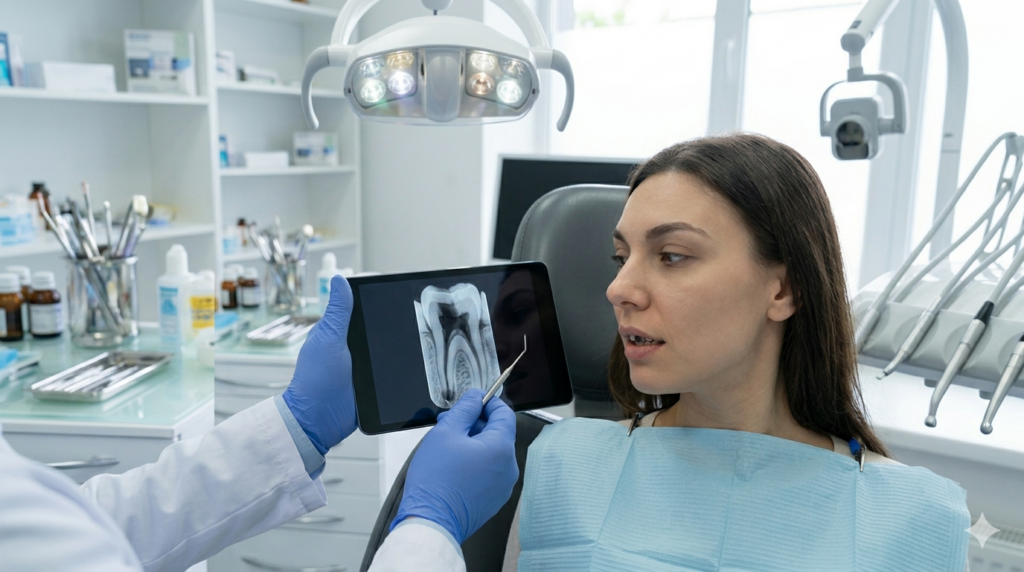
- Digital X-rays
- Pulp vitality testing
- Clinical examination
- Trauma history evaluation
These assessments help determine whether the tooth is healthy, healing, or requires treatment.
Other Signs of Trauma-Related Tooth Damage
In addition to discoloration, you may notice:
- Tooth sensitivity
- Pain when biting or chewing
- Swelling around the tooth
- Gum tenderness
- Tooth mobility (looseness)
- A history of injury to the area
However, many traumatized teeth cause no pain at all, making discoloration one of the first visible warning signs.
Treatment Options for a Darkened Tooth
The appropriate treatment depends on the underlying cause of the discoloration.
Monitoring
If the tooth remains healthy and shows no signs of infection or nerve damage, your dentist may simply monitor it during routine visits.
Root Canal Therapy
If trauma has caused the pulp to die or become infected, root canal treatment may be recommended. This procedure removes damaged tissue, eliminates infection, and preserves the natural tooth.
Internal Bleaching
For teeth that have darkened after root canal treatment, internal bleaching may help restore a more natural appearance from the inside out.
Cosmetic Restorations
In some situations, veneers or dental crowns may be used to improve the color and appearance of a traumatized tooth while also providing additional protection.
Can Trauma-Related Discoloration Be Prevented?
While accidents aren’t always avoidable, you can reduce the risk of dental trauma by:
- Wearing a mouthguard during sports
- Using seat belts properly
- Addressing bite issues that increase fracture risk
- Seeking prompt dental care after any injury to the mouth
Even if a tooth seems fine after an accident, it’s important to have it evaluated. Early detection can prevent complications from developing later.
A darkened tooth after trauma is often a sign that something has changed inside the tooth. Whether the cause is internal bleeding, nerve damage, or natural healing responses, discoloration should never be ignored.
If you’ve noticed a tooth becoming gray, brown, or darker than the others—especially following an injury—schedule a dental evaluation. Early diagnosis can help protect your oral health, preserve your natural tooth, and restore confidence in your smile
