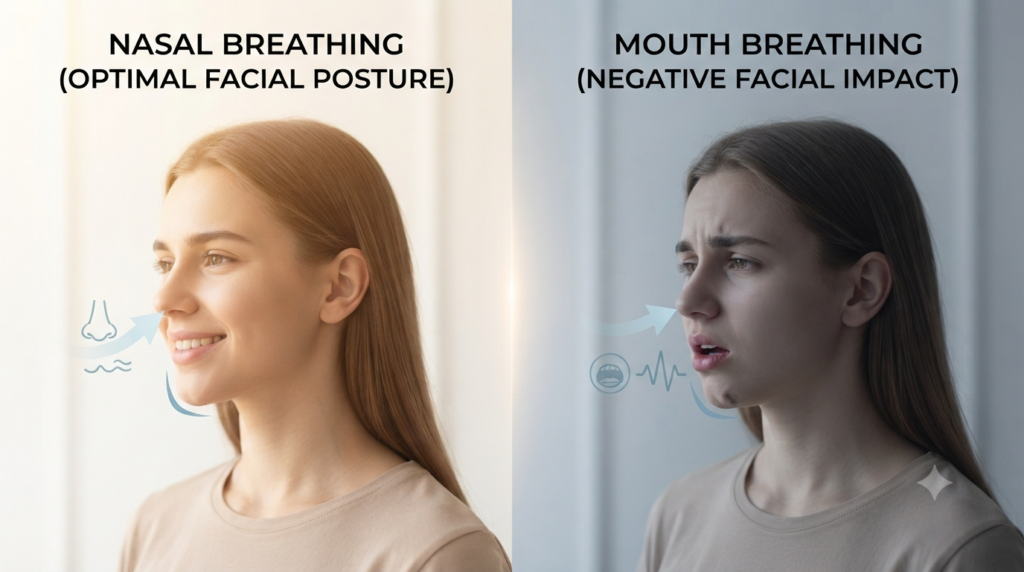
Breathing is something we do naturally without giving it much thought. However, the way we breathe can have an impact on our oral health, especially during childhood when the teeth, jaws, and facial structures are still developing.
While breathing through the nose is generally considered the normal breathing pattern, some people develop a habit of breathing primarily through their mouths. This may happen due to nasal congestion, allergies, enlarged tonsils, or other airway-related issues.
Although occasional mouth breathing during a cold is usually not a concern, persistent mouth breathing may affect the teeth, gums, jaw development, and overall oral health.
But how exactly does mouth breathing influence your smile? Let’s understand the connection and why early attention matters.
What Is Mouth Breathing?
Mouth breathing occurs when a person regularly breathes through their mouth instead of their nose. It can happen during the day, at night, or both.
In children, common causes include:
- Chronic nasal congestion
- Allergies or allergic rhinitis
- Enlarged tonsils or adenoids
- A deviated nasal septum
- Certain airway obstructions
- Habitual breathing patterns
Persistent mouth breathing should not be treated as just a habit. It is important to identify whether an underlying breathing or airway problem is making nasal breathing difficult.
- It Can Affect Jaw Development
One of the major concerns associated with chronic mouth breathing in children is its possible influence on facial and jaw development.
During childhood, the jaw and facial bones are still growing. Nasal breathing naturally involves keeping the lips together and the tongue resting against the roof of the mouth.
When a child regularly breathes through their mouth, they may develop a different resting posture. The lips may remain apart, and the tongue may rest lower in the mouth.
Over time, these changes in oral posture may be associated with differences in facial growth and jaw development.
Some children may develop a narrower upper jaw or changes in facial proportions. However, mouth breathing does not cause these changes in every child, and other genetic and environmental factors also play a role.
- It May Contribute to Crooked or Misaligned Teeth
The tongue, lips, and cheeks all play a role in maintaining the natural positioning of teeth.
When the tongue consistently rests low in the mouth instead of against the palate, the balance of pressure around the upper dental arch may change.
In some children, persistent mouth breathing is associated with:
- Crowded or overlapping teeth
- A narrow upper dental arch
- Increased overjet (upper front teeth positioned too far forward)
- An open bite
- Changes in the way upper and lower teeth meet
These alignment concerns can affect how the teeth function and may make certain dental treatments necessary as the child grows.
An orthodontic evaluation can help identify developing alignment problems and determine whether early intervention is appropriate.
- It Can Lead to Dry Mouth and Increased Cavities
Saliva is essential for maintaining a healthy mouth. It helps wash away food particles, neutralise acids, and protect tooth enamel against harmful bacteria.
When someone regularly breathes through their mouth, especially while sleeping, saliva can evaporate more quickly, leaving the mouth dry.
Reduced moisture can contribute to:
- Increased plaque accumulation
- Bad breath
- Greater risk of tooth decay
- Gum irritation
- Difficulty swallowing or speaking comfortably
Children who frequently wake up with a dry mouth or bad breath may benefit from a dental evaluation to identify the underlying cause.
- It May Increase the Risk of Gum Problems
Persistent mouth breathing can also affect the soft tissues inside the mouth.
When the gums are repeatedly exposed to airflow, particularly around the front teeth, they may become dry and irritated.
Some possible signs include:
- Red or swollen gums
- Gum tenderness
- Bleeding during brushing
- Dry or cracked lips
- Irritation around the front teeth
Maintaining proper oral hygiene is important, but addressing the underlying reason for mouth breathing is equally essential.
- It Can Affect Sleep Quality
Mouth breathing is sometimes associated with sleep-disordered breathing, including obstructive sleep apnea, particularly when enlarged tonsils or adenoids contribute to airway obstruction.
Children experiencing sleep-related breathing difficulties may show signs such as:
- Snoring regularly
- Sleeping with their mouth open
- Restless sleep
- Frequent waking during the night
- Daytime tiredness or difficulty concentrating
Poor sleep can affect a child’s daily activities, mood, and overall well-being.
If these symptoms are present, consult a healthcare professional for an appropriate airway and sleep assessment.
How Can You Identify Mouth Breathing in Children?
Recognising the signs early can help prevent oral health concerns from becoming more complicated.
Look out for these common indicators:
- Frequently sleeping with the mouth open.
- Regular snoring or noisy breathing during sleep.
- Dry lips or persistent bad breath.
- Difficulty keeping the lips comfortably closed.
- A narrow-looking upper dental arch or crowded teeth.
- Complaints of dry mouth after waking up.
These signs do not necessarily confirm chronic mouth breathing or an underlying airway condition. A professional evaluation is needed to understand the cause.
How Can Mouth Breathing Be Managed?
Managing mouth breathing starts with identifying why it is happening. The right approach depends on the underlying cause and the child’s dental and medical needs.
- Identify Airway Issues: An ENT specialist can assess nasal congestion, enlarged tonsils, adenoids, or other breathing-related concerns.
- Maintain Good Oral Hygiene: Encourage brushing twice daily with fluoride toothpaste and flossing regularly to reduce the risk of cavities and gum problems.
- Schedule Regular Dental Checkups: A dentist can monitor jaw growth, tooth alignment, and signs of dry mouth or gum irritation.
- Consider an Orthodontic Evaluation: If changes in jaw development or tooth positioning are noticed, an orthodontist can assess whether early treatment may help.
- Address Sleep-Related Concerns: Persistent snoring, restless sleep, or suspected sleep apnea should be evaluated by an appropriate healthcare professional.
Avoid forcing a child to keep their mouth closed or using mouth taping without medical guidance, particularly when nasal obstruction or sleep-related breathing problems may be present.
Mouth breathing may seem like a small habit, but persistent mouth breathing can be associated with changes in jaw development, teeth alignment, gum health, and overall oral comfort.
The effects can be particularly important during childhood, when the teeth and facial structures are still developing.
The key is to recognise the signs early and identify the underlying cause rather than treating mouth breathing as just a behavioural habit.
Regular dental visits, good oral hygiene, and timely evaluation by dental and medical professionals can help support healthy teeth, proper jaw development, and better overall well-being.
