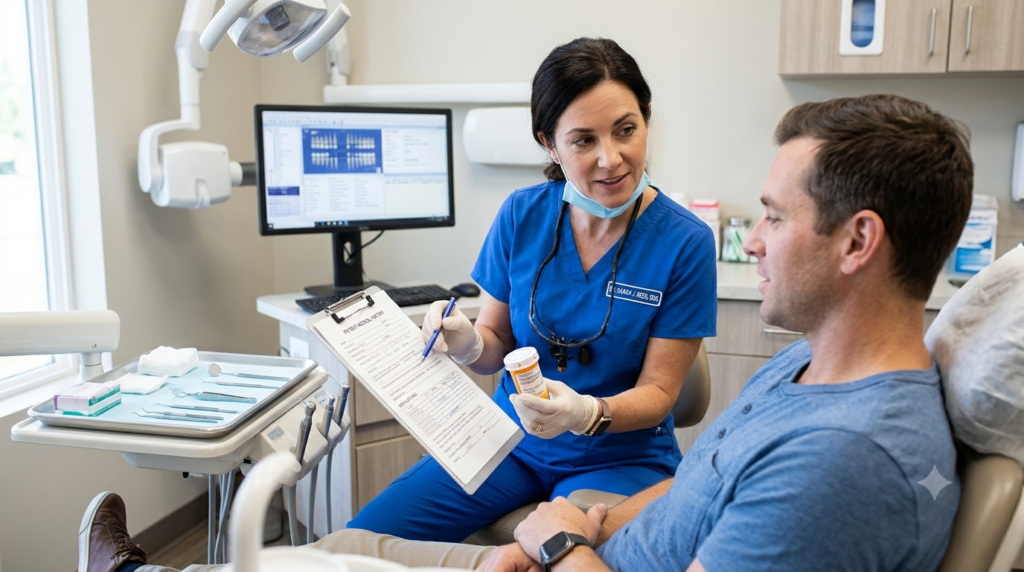
Before starting a dental procedure, your dentist may ask a question that seems unrelated to your teeth: “Are you currently taking any medications?”
Whether it is a routine cleaning, a tooth extraction, a root canal or a more complex dental procedure, sharing your medication history is an important part of dental care.
Medications can influence how the body responds to treatment, affects healing and manages pain or bleeding. Some can also cause changes in the mouth that may not be immediately noticeable.
Understanding why your dentist asks about your medications can help you see how this simple conversation contributes to safer and more effective treatment.
How Can Medications Affect Dental Treatment?
Different medications work in different ways, and some can influence oral health or dental procedures. Knowing what a patient takes allows the dentist to identify potential risks and plan treatment accordingly.
Here are some common examples:
1. Blood Thinners and Bleeding Risks
Medications such as warfarin, aspirin and certain other anticoagulants or antiplatelet drugs help prevent blood clots.
However, they may increase bleeding during procedures such as tooth extractions, gum treatments or dental surgery.
Knowing about these medications helps the dentist assess bleeding risks and plan appropriate precautions. Patients should never stop taking prescribed blood thinners without consulting their prescribing doctor.
2. Blood Pressure Medications
Certain medications used to manage high blood pressure can affect dental treatment.
Some may cause dry mouth, while others can contribute to gum enlargement or changes in taste. Additionally, some medications may influence how the body responds to certain anaesthetics.
Your dentist needs this information to select appropriate treatment options and monitor your comfort during the procedure.
3. Diabetes Medications
Medications used to manage diabetes are important to consider, particularly when planning longer dental appointments or surgical procedures.
Blood sugar levels can influence healing and the body’s ability to fight infections. Some diabetes medications may also require consideration when planning meals around treatment appointments.
Sharing your medication schedule and relevant health information helps your dentist plan treatment more effectively.
4. Medications That Cause Dry Mouth
Several medications, including certain antidepressants, antihistamines and blood pressure drugs, can reduce saliva production.
Saliva helps wash away food particles, neutralise acids and protect teeth against decay. Reduced saliva can increase the risk of cavities, gum irritation and oral infections.
If you frequently experience a dry or sticky feeling in your mouth, mention it during your dental appointment.
5. Medications for Bone Health
Some medications used to treat osteoporosis and certain cancer-related bone conditions can affect the way the jawbone heals after dental procedures.
Bisphosphonates and denosumab are examples that dentists need to know about, particularly before extractions or other procedures involving bone.
In some patients, these medications are associated with a rare but serious condition called medication-related osteonecrosis of the jaw (MRONJ).
Knowing your medication history allows the dental team to assess risks and coordinate care when necessary.
Why Is Your Complete Medication History Important?
It is not just prescription medications that matter. Your dentist should know about all substances you regularly take, including:
- Prescription medications for chronic conditions.
- Over-the-counter pain relievers and allergy medications.
- Vitamins, minerals and herbal supplements.
- Hormonal medications and other long-term treatments.
- Medications recently started, stopped or changed.
Even supplements can interact with certain medications or influence bleeding and healing.
Providing an accurate list helps your dentist understand your overall health rather than looking at your dental concerns in isolation.
Can Medications Interact With Dental Anaesthesia?
Yes. Certain medications may interact with local anaesthetics or other drugs used during dental procedures.
For example, some local anaesthetic formulations contain epinephrine (adrenaline), which may require additional consideration in patients taking certain cardiovascular medications.
Similarly, antibiotics or pain medications prescribed after treatment may interact with existing prescriptions.
Your dentist reviews your medication history to identify potential interactions and choose suitable options wherever necessary.
What Should You Tell Your Dentist Before Treatment?
To help your dentist plan your treatment safely, make sure to share:
- The names of all medications you currently take.
- The dosage and frequency of each medication, if known.
- Any medication allergies or previous adverse reactions.
- Recent changes to your prescriptions.
- Any supplements or non-prescription products you use.
- Relevant medical conditions for which you are receiving treatment.
If you are unsure about a medication’s name or dosage, carrying your prescription or a current medication list can make the conversation easier.
Why Open Communication Makes Dental Care Safer
Your dental health is closely connected to your overall health. A medication that manages one condition may influence another aspect of your body, including your gums, teeth, healing process or response to treatment.
That is why discussing medications is not just a routine formality. It helps your dentist understand possible risks, prevent avoidable complications and make informed decisions about your care.
Before your next dental appointment, take a moment to review your medication list and share any changes with your dentist.
A little information before treatment can make a meaningful difference in keeping your dental care safe, comfortable and well-planned.
