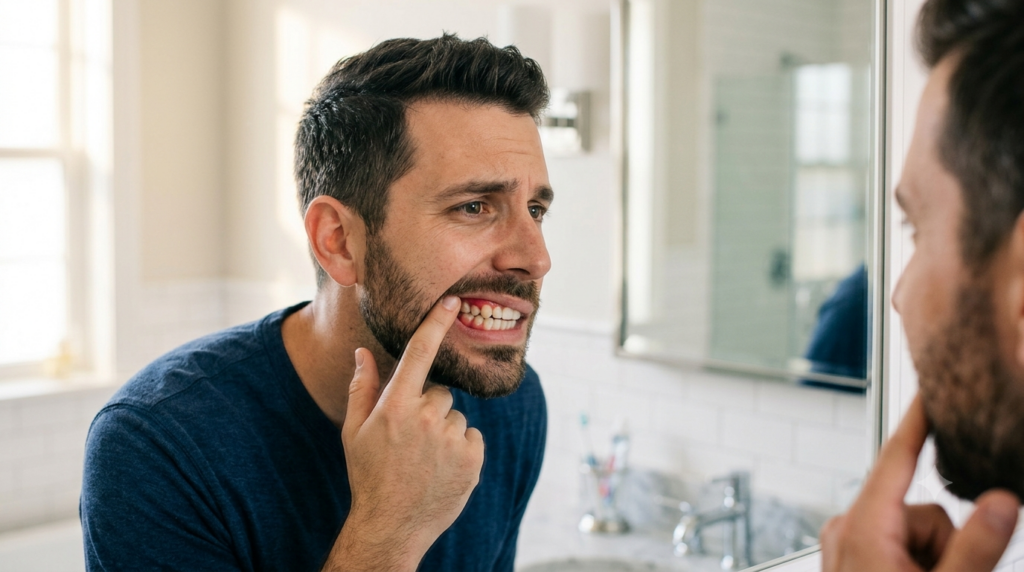
Noticing that your gums are swollen around just one tooth can be concerning, especially when the rest of your gums look and feel normal. While occasional gum irritation can happen after eating certain foods or brushing too firmly, swelling that is limited to one area may have a more specific cause.
The good news is that many causes can be treated effectively when identified early. Understanding why the swelling occurs can help you know when it is time to see a dentist.
What Does Swelling Around One Tooth Mean?
Localized gum swelling usually indicates irritation, inflammation, or infection affecting the tooth or the surrounding gum tissue. Unlike generalized gum swelling, which may be associated with broader oral health issues, swelling around a single tooth can point to a problem concentrated in that particular area.
The cause may be something as simple as food trapped between the teeth or something requiring dental treatment, such as decay or an infection.
Common Causes of Swollen Gums Around One Tooth
1. Food Trapped Between Teeth
One of the most common reasons for localized gum swelling is food becoming trapped between a tooth and the neighboring tooth.
Small particles can irritate the gum tissue and create an environment where bacteria accumulate. The area may become swollen, tender, or uncomfortable.
Carefully cleaning between the teeth with dental floss or an appropriate interdental cleaner may help if trapped food is the cause. However, avoid aggressively forcing floss into the swollen area, as this can cause additional irritation.
2. Gum Disease
Gum disease can sometimes affect one particular area more noticeably than others. Plaque and tartar buildup around a tooth can irritate the surrounding gum tissue, leading to redness, swelling, bleeding, or tenderness.
If the inflammation progresses, the gum may begin pulling away from the tooth and create a periodontal pocket where bacteria can accumulate.
Professional dental cleaning and appropriate periodontal treatment may be necessary depending on the severity.
3. A Dental Abscess
A swollen area around one tooth can sometimes be a sign of a dental abscess. An abscess is a collection of pus caused by a bacterial infection and can develop around the root of a tooth or within the surrounding gum tissue.
You may notice a painful bump, throbbing pain, sensitivity to temperature, pain when biting, a bad taste, or drainage from the area. Some dental infections can also occur with little or no pain.
An abscess requires prompt dental evaluation because the infection generally does not resolve simply by waiting.
4. Tooth Decay
A cavity that has progressed deeper into a tooth can contribute to inflammation or infection around the affected tooth.
If the decay reaches the pulp, where the tooth’s nerves and blood vessels are located, bacteria can enter the deeper tissues and potentially lead to an infection around the root.
Swelling around the tooth may therefore be accompanied by sensitivity, persistent toothache, or discomfort when chewing.
5. A Cracked or Damaged Tooth
A cracked tooth can allow bacteria to enter areas that are normally protected. Depending on the location and severity of the crack, this can lead to localized inflammation around the tooth.
Some people experience pain when biting or releasing a bite, while others notice sensitivity or swelling without obvious damage.
Because cracks can be difficult to see, a dental examination is important if swelling continues around the same tooth.
6. Irritation From Dental Work or Appliances
Recent dental treatment can sometimes cause temporary irritation around a tooth. A filling, crown, orthodontic appliance, or other dental restoration may affect the surrounding tissue.
If swelling develops after a dental procedure and does not gradually improve, contact your dentist. The restoration may need to be checked for fit, irritation, or another underlying issue.
7. Gum Injury
Something as simple as biting into a hard or sharp food, brushing too forcefully, or accidentally injuring the gum can cause localized swelling.
Minor injuries often improve as the tissue heals. If the swelling remains, becomes more painful, or keeps returning, another cause should be considered.
When Should You See a Dentist?
A small amount of temporary irritation may settle with careful oral hygiene. However, persistent swelling around one tooth should not be ignored.
Make an appointment with your dentist if the swelling:
- Lasts for more than a few days
- Keeps coming back in the same location
- Is accompanied by tooth pain or sensitivity
- Causes bleeding or pus
- Makes chewing uncomfortable
- Occurs with a bad taste or persistent bad breath
- Is associated with a loose or damaged tooth
Seek urgent dental or medical care if swelling spreads into the face or jaw, or if you develop difficulty breathing, swallowing, or opening your mouth. These symptoms can indicate a more serious infection.
What Can You Do Until Your Appointment?
Keep the area clean by gently brushing twice a day and cleaning between your teeth. Rinsing with warm salt water may provide temporary comfort, but it does not treat an underlying infection.
Avoid squeezing, popping, or repeatedly touching a swollen area. If a dental abscess is responsible, attempting to drain it yourself can worsen the situation.
Most importantly, do not rely on pain relief alone if the swelling persists. Treating the underlying cause is what helps prevent the problem from progressing.
Swollen gums around one tooth can result from trapped food, gum disease, injury, decay, a cracked tooth, or an infection. Because several different conditions can produce similar symptoms, the exact cause cannot always be determined from appearance alone.
If the swelling does not quickly settle or is accompanied by pain, drainage, or other symptoms, a dental examination can help identify the source and determine the appropriate treatment. Addressing localized gum swelling early can help protect both the affected tooth and the surrounding tissues.
